The escalating issue of water pollution has prompted increasing recognition of the importance of wastewater treatment. Various water purification agents have consequently become highly sought after.
Polyferric sulphate is one such agent. As a water treatment chemical that has gained popularity in recent years, its flocculation and sedimentation efficacy is comparable to that of polyaluminium chloride. However, it offers lower operational costs and demonstrates superior performance in treating phosphorus-containing wastewater. Let us now examine its production process.
During production, sulphuric acid, ferrous sulphate, and water are added in specific proportions to a reaction vessel for processing. The resulting liquid is then transferred to a reactor. Oxygen and oxidising agents such as sodium nitrite are introduced as catalysts, reacting with the liquid until ferrous ions are fully oxidised. The resulting liquid is then transferred to a moulding tank. Finally, it is conveyed from the moulding tank to a spray tower, where it is atomised by high-pressure nozzles. Simultaneously, hot air from a furnace is blown into the spray tower at high temperatures. This rapidly dries the atomised polyferric sulphate, forming the solid end product.
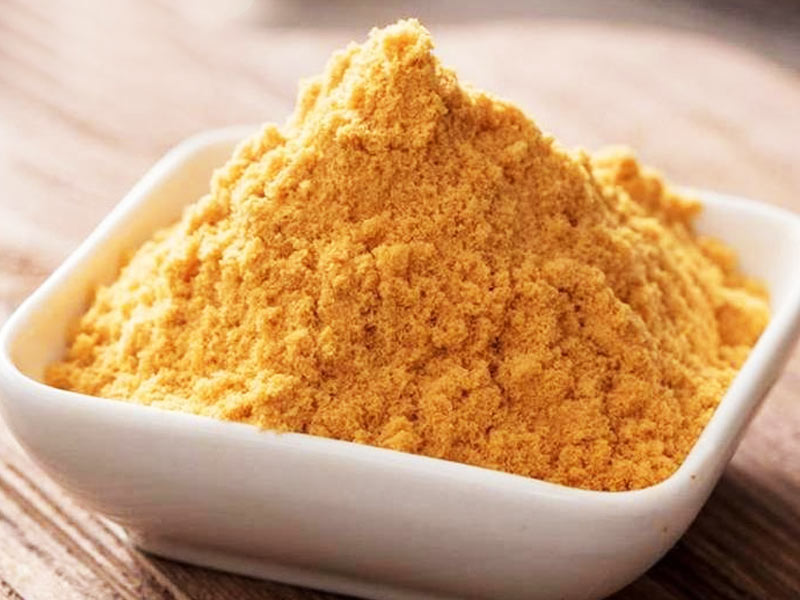
It is crucial to note that basicity poses a significant challenge during ferric sulphate polymer production. One must not assume higher basicity is universally preferable. The optimal basicity level depends entirely on the specific application scenario. Generally, basicity can be understood as the quantity of OH⁻ ions. Higher basicity indicates more OH⁻ ions, correlating with increased polymerisation and longer molecular chains. Conversely, lower basicity results in shorter molecular chains. A higher basicity indicates more free iron ions. Higher basicity accelerates hydrolysis rates. Longer molecular chains enhance flocculation. For applications requiring superior flocculation performance, higher basicity is preferable. However, for phosphorus removal or heavy metal remediation, lower basicity is more advantageous. When used as a solution to lower raw water pH, the pH of the raw water must also be considered.
It should be noted that the base degree of polyferric sulphate itself significantly impacts product stability. Higher base degrees compromise stability, making the solution more prone to hydrolysis and precipitation, which causes turbidity and reduces iron content. It also affects storage and dosage. Nevertheless, within the 8%-16% base degree range, the product remains stable for six months without issue.