Polyacrylamide has now become a widely recognised water purification product, finding application across numerous sectors. However, during use, one may observe an increase in viscosity during dissolution. What accounts for this phenomenon? Today we shall examine this in detail.
The increased viscosity of polyacrylamide stems from its structural properties. When the charge density on its molecular outer layer exceeds that of the inner layer, it exhibits negative characteristics. This negative product structure becomes unstable. Simultaneously, the excess external charge causes it to continuously adsorb surrounding cationic molecules. As molecular weight progressively increases, viscosity also rises steadily. Anionic product aqueous solutions inherently possess viscosity. Higher molecular weights correlate with greater viscosity. This primarily stems from the elongated molecular structure of anionic products, which readily impedes flow during viscous motion. Under normal conditions, viscosity reflects the magnitude of frictional resistance. Any polymeric flocculant will exhibit high viscosity in organic solutions, with viscosity increasing steadily alongside molecular weight.
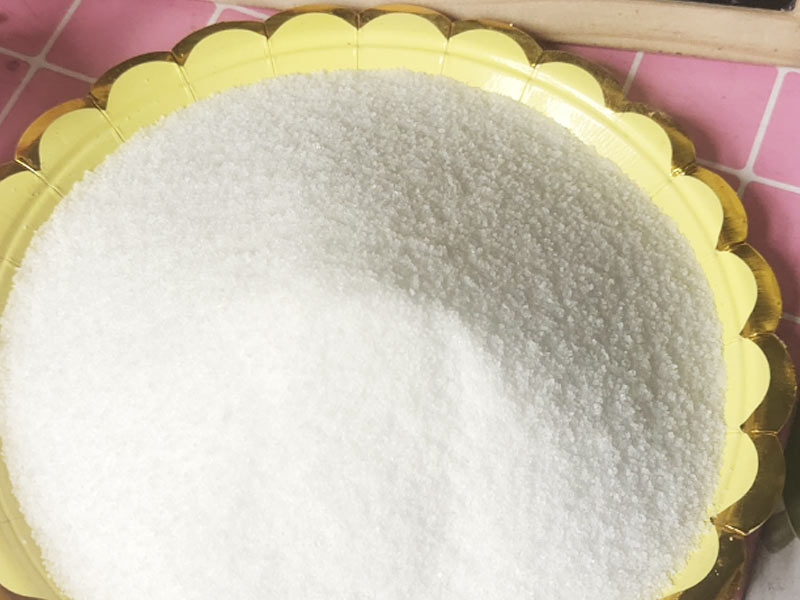
Another scenario involves polyacrylamide viscosity decreasing. Why does this occur? Viscosity reduction is influenced by storage duration, ambient temperature, stirring speed, and water quality. It is important to note that prepared product solutions have a limited shelf life. Prolonged storage accelerates product degradation, leading to lower viscosity. Cationic products exhibit more pronounced degradation than anionic ones. Secondly, temperature plays a crucial role. Particularly in summer, once temperatures exceed 25°C, the solution's molecular weight degrades progressively with prolonged preparation time. Higher temperatures accelerate both the likelihood and rate of degradation, ultimately leading to reduced viscosity and product failure. Stirring speed is another critical factor. When dissolving the amide, the stirring speed must neither be excessively fast nor excessively slow. A speed of 60 revolutions per minute is optimal. Insufficient stirring speed may cause undissolved agglomerates, while excessive speed may induce degradation, compromising efficacy. Finally, water quality is critical. When dissolving amides, only clean tap water should be used. Impurities, alkaline or acidic water must be avoided, as these adversely affect solution viscosity. Ultimately, this increases water treatment costs and reduces operational efficiency.