Currently, the usage of
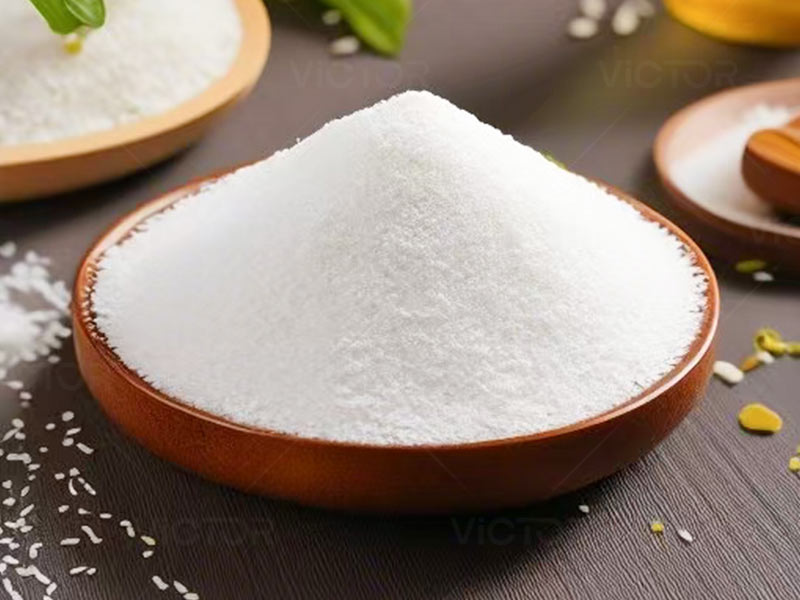
polyacrylamide in the water treatment chemical market continues to rise. To enhance user convenience, numerous manufacturers have developed and produced various types of polyacrylamide. This enables faster and more effective removal of impurities from water, thereby maximising the superior performance of polyacrylamide. Today, VICTOR Water Treatment's editor ALLEN provides a detailed overview of the usage quantities and application methods for different polyacrylamide types.
Usage Quantities and Application Methods for Anionic Polyacrylamide:
- Primarily employed as a flocculant in wastewater treatment for sedimentation purposes. The standard concentration ratio is 0.1% (zero point one per cent).
- Maintain stirring speed between 40 to 60 revolutions per minute. Stirring duration should be approximately 40 minutes.
- Prior to use, conduct small-scale trials with wastewater samples to determine optimal ratios. Add 100 millilitres of wastewater sample to a measuring cylinder. Gradually introduce 0.5 millilitres at a time via syringe. Maintain continuous, uniform stirring with a stirrer while observing wastewater changes. Assess sedimentation and flocculation efficacy to determine the optimal polyacrylamide dosage.
- Primarily employed in metallurgical plants, steelworks, mineral processing plants, paper mills, coal washing plants, and similar industries. The solid PAM dosage ranges from 5 to 10 grams per tonne of wastewater.
Usage and application methods for cationic polyacrylamide:
- Primarily employed in wastewater treatment for sludge dewatering. Standard concentration ratio: 0.2%.
- Maintain uniform stirring speed: approximately 40 to 60 revolutions per minute. Stirring duration: approximately 50 minutes.
- Prior to use, conduct small-scale trials with wastewater samples to determine optimal ratios. Add 100 millilitres of wastewater sample to a measuring cylinder. Gradually introduce 0.5 millilitres at a time via syringe. Maintain continuous, uniform stirring with a stirrer while observing changes in the wastewater, sedimentation, and flocculation effects to ascertain the optimal polyacrylamide dosage.
- Primarily employed in chemical plant effluent, coal washing plant effluent, sewage treatment facilities, and paper mill effluent industries. Solid polyacrylamide dosage ranges from 10-20 grams per tonne of wastewater.
Usage and application method for non-ionic polyacrylamide:
- Standard concentration ratio: 0.1%.
- Application method identical to anionic polyacrylamide. Stirring duration: approximately 50 minutes.
That concludes today's introduction to polyacrylamide: anionic, cationic, and non-ionic variants. Given their differing properties, application methods vary accordingly. We must determine the most suitable polyacrylamide usage and dosage based on the specific industry to ensure optimal water purification results.