Polyacrylamide (PAM) is a high-molecular-weight polymer widely used in the production of chemical products. PAM possesses excellent flocculation, thickening, adhesion, and emulsifying properties, playing a vital role in many fields. This article will detail the manufacturing methods of polyacrylamide.
Manufacturing Principle
Polyacrylamide is produced by the free radical polymerization of acrylamide monomers under the action of an initiator. In the polymerization reaction, the acrylamide monomers open double bonds through the action of a free radical initiator, forming free radicals. These free radicals then undergo addition reactions with the double bonds in the monomer molecules, forming polymer chains. By controlling the reaction conditions, polyacrylamides with different molecular weights, molecular structures, and properties can be obtained.
Polyacrylamide Manufacturing Methods
Aqueous Solution Polymerization
The aqueous solution polymerization method involves adding acrylamide monomers and a water-soluble initiator to water. The polymerization reaction is carried out under appropriate temperature and pH conditions, producing an aqueous solution of polyacrylamide. This method has advantages such as simple operation, low equipment investment, and low production cost. However, the resulting polyacrylamide has a lower molecular weight. It is suitable for preparing low-molecular-weight polyacrylamide.
Reverse Emulsion Polymerization
Reverse emulsion polymerization involves adding acrylamide monomers, initiators, and emulsifiers to the oil phase, forming an oil-in-water emulsion. Polymerization then occurs under appropriate conditions, producing polyacrylamide latex particles. This method can yield high molecular weight, high viscosity polyacrylamide. However, it is more complex and requires significant equipment investment.
Suspension Polymerization
Suspension polymerization involves adding acrylamide monomers, initiators, and suspension stabilizers to water, forming a suspension system. Polymerization then occurs under appropriate conditions, producing a polyacrylamide suspension. This method combines the advantages of aqueous solution polymerization and reverse emulsion polymerization. It can yield high molecular weight, high viscosity polyacrylamide and is simpler to operate with less equipment investment.
Manufacturing Process Control
During the manufacturing process of polyacrylamide, the following factors need to be controlled to ensure product quality and performance:
- Monomer Concentration: Monomer concentration affects the polymerization rate and molecular weight. The monomer concentration needs to be adjusted according to product requirements.
- Initiator Type and Dosage: The type and dosage of initiator affect the polymerization rate and molecular weight distribution. Appropriate initiators and dosages need to be selected according to product requirements.
- Reaction Temperature and Time: Reaction temperature and time affect the degree of polymerization and molecular weight. Reaction temperature and time need to be controlled according to product requirements.
- pH Value: pH value affects the polymerization rate and product properties. The pH value of the reaction system needs to be controlled according to product requirements.
Finished Product Granulation and Packaging
After the polyacrylamide is manufactured, post-processing is required to ensure product quality and performance. Common post-processing methods include:
- Drying: Drying the polyacrylamide aqueous solution or suspension into powder or granular products.
- Pulverization: Pulverizing the dried polyacrylamide to obtain products of a certain particle size.
- Packaging: Packaging the products according to specific specifications. Facilitates transportation and storage.
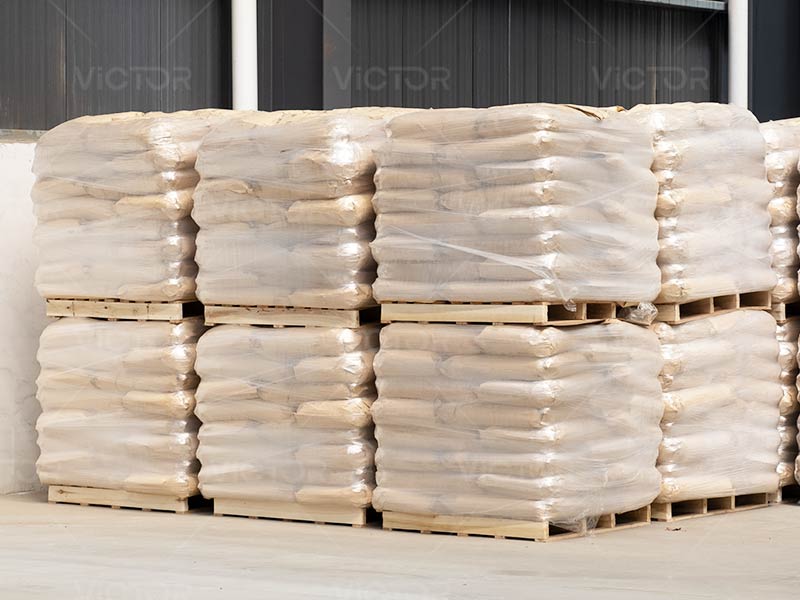
In summary, the manufacturing method of polyacrylamide needs to be selected and controlled based on the quality of raw materials, product requirements, and actual conditions. This ensures the quality and performance of the packaged product. Furthermore, attention must be paid to protecting the product's quality and performance in subsequent processes to meet the needs of the chemical production industry.