During the application of water purification chemicals, you will find that polyaluminium chloride and
polyacrylamide form an ideal pairing. When employing commonly used water treatment agents, careful attention must be paid to their mixing ratios. Neglecting this can lead to significant wastage. So, what should be considered when combining these two substances?
Polyacrylamide is a novel high-molecular-weight water treatment chemical. It exhibits adsorption and bridging effects on polymeric products. When dissolved in wastewater, it forms elongated chains that adsorb and bridge certain substances, thereby achieving flocculation and sedimentation. Meanwhile, polyaluminium chloride utilises its high-molecular-weight three-dimensional network structure to induce coagulation in wastewater, forming large flocs. The intertwining and interconnected polymer chains cause the floc structure to enlarge and thicken. This accelerates the separation of solids from liquids, ultimately forming sediment. In wastewater treatment, these two agents are frequently used in combination. This approach not only reduces water treatment costs but also enhances the flocculation efficiency and speed of pollutants.
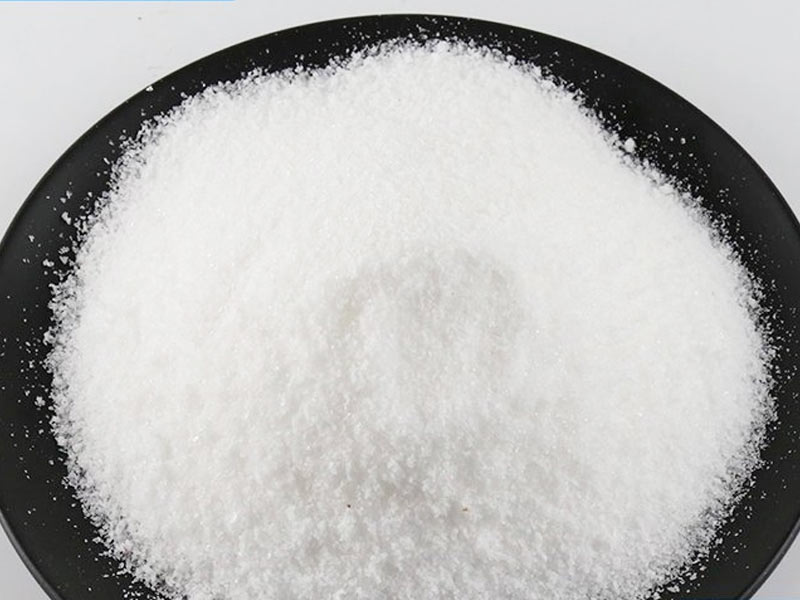
Prior pilot testing is essential when combining these agents. For negatively charged suspended solids, a polyaluminium chloride and polyacrylamide combination is recommended. Dosage determination requires experimental testing to establish the optimal polyaluminium chloride dosage when used alone. Actual application typically requires 1/4 to 1/3 of this quantity. Subsequently, a measured quantity of polyacrylamide is added. This approach yields favourable operational outcomes. For wastewater treatment, we generally recommend selecting formulations based on actual water quality conditions. This is particularly pertinent given the extensive range of polyacrylamide grades available, which carry a higher cost relative to polyaluminium chloride. To achieve optimal treatment results, one should not arbitrarily adopt others' recommendations when selecting formulations.
During application, note the differing mechanisms of polyaluminium chloride and polyacrylamide. Polyaluminium, as a water treatment agent, primarily utilises intermediate-charge interactions to flocculate and aggregate fine suspended particles within wastewater. Amide, conversely, possesses unique adsorption bridging properties that form large, compact flocs. This facilitates the precipitation or flotation of these flocs. It is crucial to note that their addition sequences differ. They must not be mixed during application. When wastewater or sewage exhibits low turbidity, polyaluminium chloride should be added first, followed by polyacrylamide. Conversely, if high turbidity is present, polyacrylamide must be added first, followed by polyaluminium chloride.