Given
polyacrylamide's increasing practicality in daily applications and expanding scope of use, many have become familiar with polyacrylamide products. As a high-molecular-weight polymer, it holds an irreplaceable position in water treatment, the papermaking industry, and other sectors. However, some users have observed that polyacrylamide tends to form lumps during application. Why is this?
As a commonly used water purification agent, Its water purification capabilities have garnered public acclaim. Yet, polyacrylamide requires dissolution during application, a process that can be relatively time-consuming. But what constitutes an appropriate dissolution time? In truth, this duration correlates with factors such as molecular weight, degree of hydrolysis, product quality, and temperature. Moreover, the selected polyacrylamide grade dictates dosage requirements. For instance, under identical water conditions, dissolution times for 18-million-molecular-weight polyacrylamide and 8-million-molecular-weight polyacrylamide may differ by a factor of one to two.
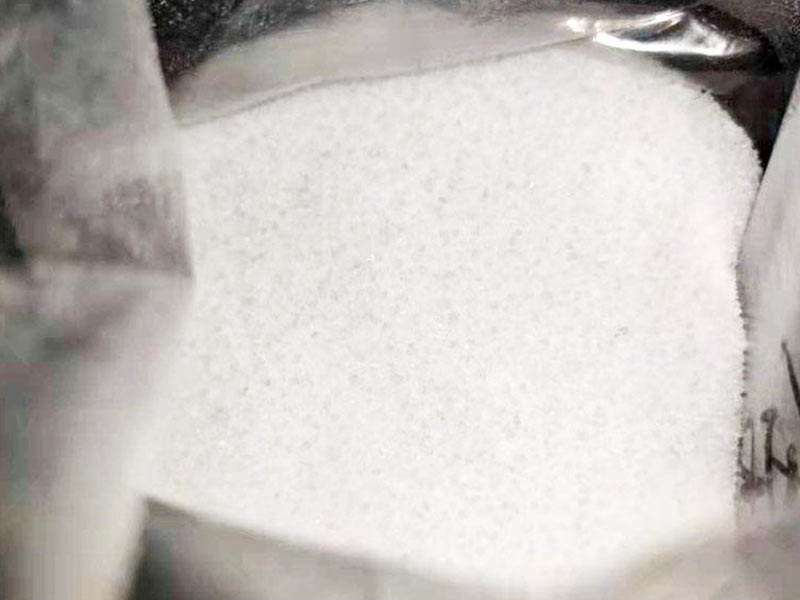
Furthermore, the formation of lumps during the dissolution and use of polyacrylamide products is not a quality issue but rather a consequence of improper handling. When dissolving, polyacrylamide first undergoes swelling before gradually dissolving. Should an excessive quantity of polyacrylamide be added at once without thorough, uniform dispersion and stirring, the portion first exposed to water will gradually swell and expand. This swollen mass will then envelop the unexposed sections, instantly forming insoluble agglomerates. Therefore, it is advisable to first agitate the water thoroughly before slowly adding the polyacrylamide product. This effectively prevents agglomeration. Consequently, the occurrence of polyacrylamide agglomeration is related to the polyacrylamide concentration, mixing duration, and uniformity of addition.
Additionally, dosage must be carefully considered. The wastewater quality, concentration, and specific industry application all significantly influence the required polyacrylamide dosage. Variations in water quality, industrial sector, and sludge composition can each necessitate adjustments to the dosage. Consequently, thorough testing prior to implementation is essential.