During the application of
polyaluminium chloride, distinctions are made between potable-grade, industrial-grade, and food-grade variants based on the specific industry requirements. Industrial-grade polyaluminium chloride serves as a treatment agent for industrial wastewater. It typically presents as brownish, yellowish-brown, or yellow in colour. Naturally, products of differing hues exhibit variations in concentration, which consequently affects their pricing. Today, we shall explore how to discern the quality of industrial-grade polyaluminium chloride products.
Industrial-grade polyaluminium chloride typically presents as a powdered solid with concentrations ranging from 20% to 30%. Generally, lower concentrations tend to exhibit a brownish hue, with colour variations occurring as the concentration increases. Colour serves as an indicator for assessing the quality of industrial-grade products. Most industrial-grade products display a brownish colour, with concentrations predominantly falling between 22% and 24%. Given their brownish hue, colour variations are minimal. For instance, products with 22% and 24% content exhibit virtually identical shades. Distinction can only be made by feel, with the 22% product appearing slightly more moist to the touch than its 24% counterpart. To reliably differentiate between the two, laboratory testing is likely required.
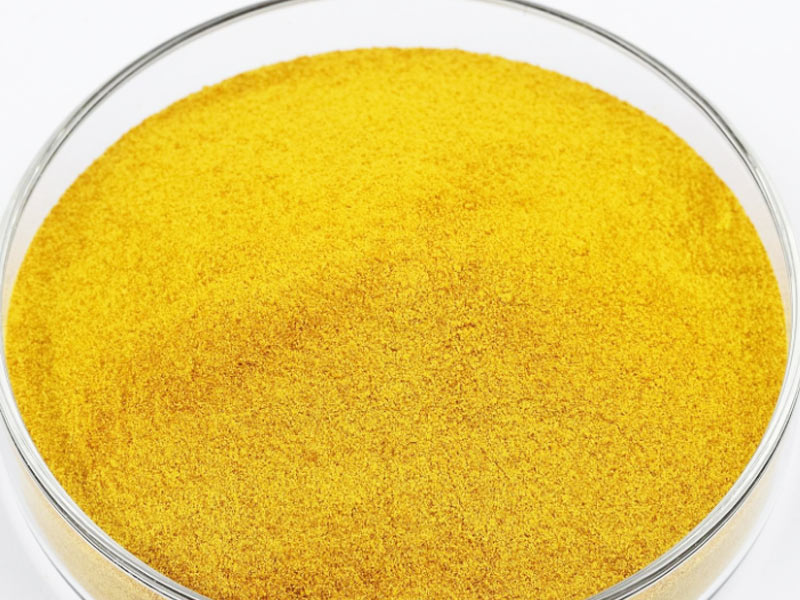
Industrial-grade polyaluminium chloride with 26%-30% content can be distinguished by colour. Due to variations in production processes, products ranging from 26% to 30% content exhibit different hues, from brownish-yellow to pale yellow. Furthermore, significant colour differences exist between manufacturers. For instance, some manufacturers' 30% content products remain brownish-yellow. This is attributed to increased heavy metal ions causing a darker colouration.
What advantages does industrial-grade polyaluminium chloride offer? As an industrial wastewater treatment product, it boasts broad applicability across diverse water qualities. It effectively removes suspended solids (SS), chemical oxygen demand (COD), biological oxygen demand (BOD), and heavy metal ions such as potassium, lead, and mercury, delivering pronounced water purification with high turbidity reduction rates. Simultaneously, it exhibits rapid flocculation and sedimentation. Even when added in excess, it does not cause water turbidity. It maintains stable treatment efficacy even at low water temperatures. Its low alkalinity also minimises equipment corrosion. Suitable for wastewater treatment within a pH range of 5-9, its operational convenience ensures no long-term damage to equipment or pipeline blockages. Customisation is available for specific quality, specification, or content requirements, with production tailored to meet diverse client needs and deliver optimal performance.