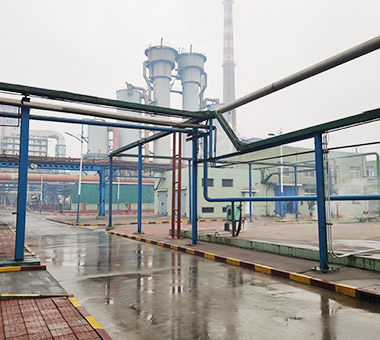
Many people are unfamiliar with coking plant effluent. So how is this effluent produced? It is primarily generated from chemicals such as coke, coke oven gas, coking ovens and ammonium sulphate. Coking plant effluent poses significant risks to human health and causes severe air, environmental and water pollution. It contains numerous harmful substances. Prolonged exposure may lead to chronic poisoning. It can even cause damage to the nervous system, kidneys and liver function. If such effluent enters water bodies, it is highly likely to result in mass deaths of fish and shrimp. This clearly demonstrates the severe harm that coking plant effluent inflicts on water quality. It contains substances such as phenols, oil, ammonia and cyanide.
Chemical used:
polyaluminium chlorideProcedure: First, a sample of the coking plant effluent is taken. Beaker tests are conducted to determine the specific type of polyaluminium chloride (PAC) and the appropriate dosage. Treating coking plant effluent with polyaluminium chloride effectively removes COD, BOD, turbidity and other harmful substances, such as residual aluminium, from the effluent. The greater the removal of COD, the fewer impurities will remain in the water. Once the PAC dosage reaches a certain level, the pH must be adjusted to a range where the optimal alkalinity is 1.8. The use of polyaluminium chloride to treat coking plant effluent yields excellent flocculation results, resulting in very low levels of residual impurities in the water.
Once the PAC solution has been prepared, it is added to the coking plant effluent to achieve the final water purification effect.