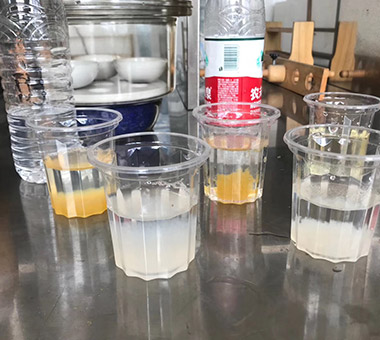
Municipal wastewater is also a relatively common type of wastewater. It is collected via underground pipes to consolidate all wastewater streams. This includes various types of wastewater: domestic sewage, industrial effluent, wastewater from food processing plants, and wastewater from drinking water treatment plants. This type of wastewater is relatively stable. However, it is highly turbid and accompanied by a foul odour. Containing phosphorus, aluminium, nitrogen, chromium, nickel and other elements, the effluent is slightly alkaline. This type of wastewater does not typically contain toxic or hazardous substances. Microorganisms in the effluent reproduce rapidly, resulting in a high concentration of bacteria and viruses. However, this type of wastewater is relatively easy to treat.
Chemical used:
Polyaluminium chloride
Treatment process: After municipal wastewater undergoes treatment with polyaluminium chloride, it can easily meet national discharge standards. This is particularly true of spray-dried polyaluminium chloride, which offers excellent stability, a wide pH range, rapid flocculation forming large, dense flocs, rapid sedimentation of impurities, excellent dewatering properties, and requires a lower dosage. It also offers advantages such as lower water purification costs. As with standard procedures, a specific volume of wastewater must first be sampled to conduct a beaker test to determine the dosage and the specific grade of polyaluminium chloride required. Following the test, the polyaluminium chloride is first prepared as a solution of a specific concentration, which is then added to the municipal wastewater to complete the purification process.