The rapid expansion of industrial sectors has resulted in substantial wastewater generation. Efficient wastewater treatment and recycling methods have consequently garnered significant attention. Industrial effluents primarily originate from sectors such as textile dyeing, oil refining and petrochemicals, pharmaceutical manufacturing, and coking. Given the complex composition of these effluents, diverse treatment approaches are required.
Activated carbon, as an emerging wastewater treatment product, demonstrates excellent efficacy in addressing sudden odours and industrial contamination within water sources. This stems from its unique pore structure and highly developed specific surface area. While adsorbing pollutants from water, it also provides an ideal habitat for various aquatic microorganisms. Under suitable temperatures, activated carbon can effectively perform adsorption and decomposition functions, yielding superior wastewater purification results.
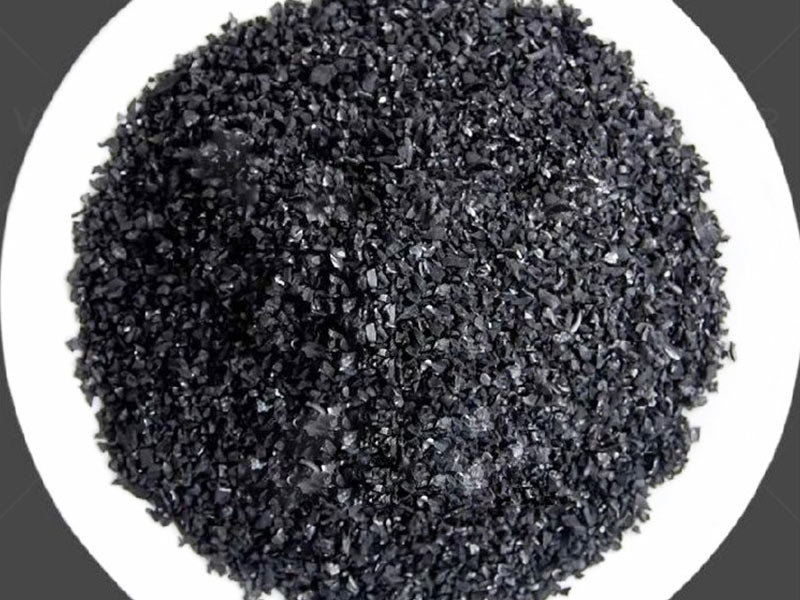
In water treatment, activated carbon typically exists in powdered or granular forms. Powdered activated carbon is generally added directly to raw water to remove odours and unpleasant tastes, demonstrating excellent efficacy in this regard. Its application is typically intermittent, requiring control of dosage ratios, timing, and injection points based on the specific water source. Granular activated carbon requires less consideration. Following dosing, it is typically operated in fixed-bed or moving-bed configurations. Furthermore, granular activated carbon is regenerable and can be reused.
Although granular and powdered carbon serve the same purpose, granular carbon is less prone to loss and facilitates reuse. It is suitable for continuous water treatment processes involving relatively light contamination. Powdered carbon, however, is currently difficult to recover and is generally a single-use product employed in treating heavily polluted water.
Activated carbon enjoys extensive application in water purification. Within industrial wastewater treatment, it can be integrated into various processing stages. For complex industrial effluents requiring multi-stage treatment combinations, activated carbon often serves in critical later-stage purification applications. Furthermore, it can be combined with diverse materials to form novel process technologies, achieving enhanced treatment efficacy.