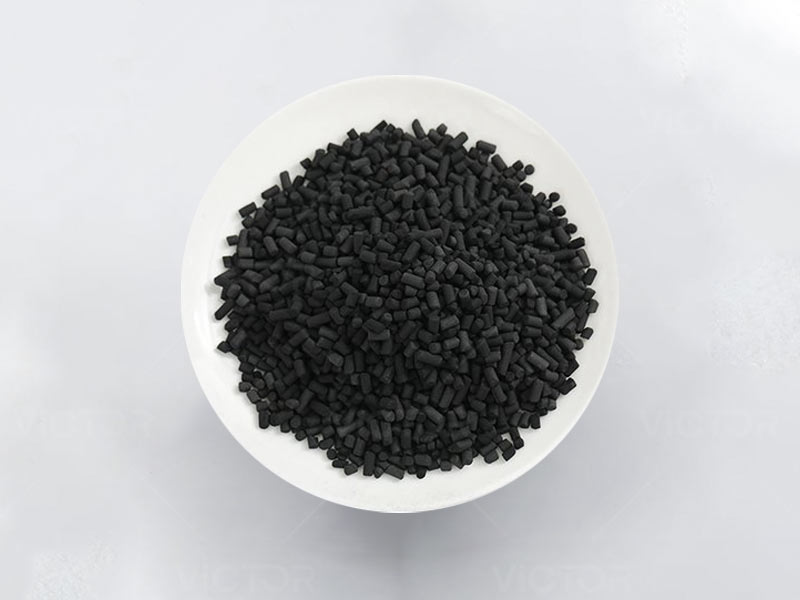
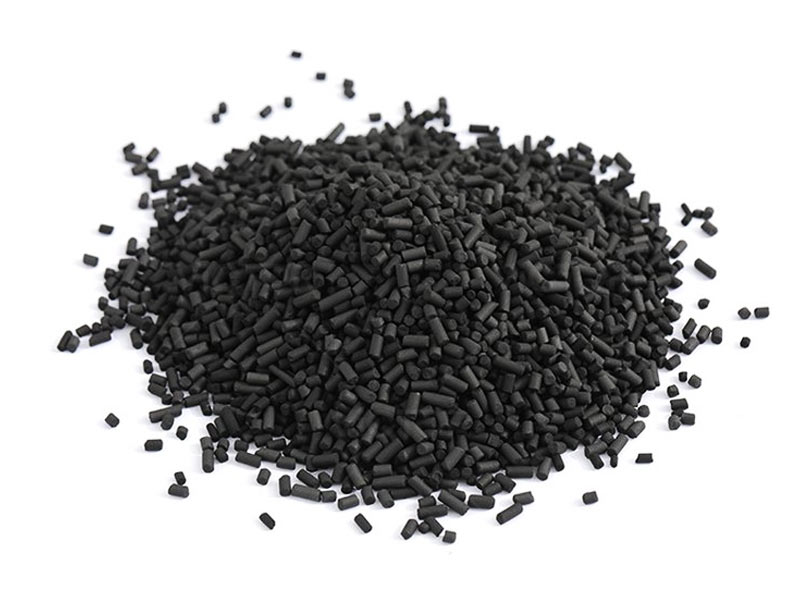
Product Detail:Columnar activated carbon presents as cylindrical in shape, typically appearing deep grey or greyish-black in colour. It emits no odour and is entirely non-toxic. This form of activated carbon is produced by processing high-quality raw materials such as..
Application:Purification and treatment of waste gases from chemical, pharmaceutical, environmental protection, f
Columnar activated carbon, utilising superior raw materials, exhibits lower greyness compared to conventional coal-based activated carbon. With fewer impurities, it achieves superior adsorption performance for CTC and other compounds. Each product features a highly uniform particle diameter, enabling maximum adsorption and even desorption of chemicals, thereby extending service life. Standard medium-grade activated carbon typically lasts just over one year. This columnar activated carbon, however, boasts a lifespan of two to three years. This wood-based columnar activated carbon is a non-bonded variety, significantly departing from traditional tar-bonded moulding techniques. It requires no binding agents whatsoever, relying entirely on the intermolecular interactions and inherent properties of carbon. Manufactured through scientific methods, it prevents carbon pore blockage, enabling the adsorption capacity of the pores to be fully utilised.
Common specifications for granular activated carbon include: 1.0mm, 1.5mm, 3.0mm, 4.0mm, 5.0mm, 6.0mm, and 80mm. Custom specifications can be produced according to specific client requirements.
Employing advanced production techniques, its service life is 3-4 times that of coal-based activated carbon.
It exhibits exceptionally high adsorption and desorption properties, thereby enhancing solvent recovery rates.
Capable of deodorisation and removal of toxic and harmful substances from water, including COD, BOD, colourants, and malodours. Adding a filter further optimises air purification performance.
Offers excellent value for money, facilitating organic solvent recovery across diverse settings.
Possesses a high ignition point, ensuring safe operational use.
Columnar activated carbon may be employed directly. It may also be placed within purification cabinets or adsorption beds. Should exhaust gases persist at high concentrations or with substantial discharge volumes, additional purification cabinets or adsorption beds may be incorporated for continuous operation. During utilisation, elevated exhaust gas temperatures will diminish adsorption capacity, as adsorption capacity and temperature exhibit an inverse relationship. The faster the temperature rises, the more rapidly adsorption capacity diminishes, and vice versa. Another critical consideration is avoiding high concentrations of oil mist or dust, as these significantly increase resistance and reduce adsorption efficiency. Should such conditions arise, it is advisable to install a dust filter prior to use to achieve optimal purification results and extend operational lifespan.